Birth through Death
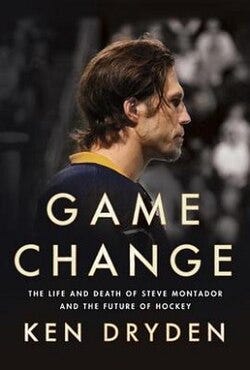
My most recent read: Ken Dryden's "Game Change: The Life and Death of Steve Montador and the Future of Hockey"

For those of you who know me, you know that I like to read. A lot. I also like to write about what I read. It helps me clarify and build on what’s in my head…like a journal entry. It helps me process what I learn and make sense of things. Over the past week I’ve read a book that has filled my mind unlike any other book I’ve ever read - it’s pushed me into my own research, my own studies, and my own ideas. Here is a review mixed with some of those ideas of mine - I hope it makes sense.
___________________________________________________________________________
I started reading Ken Dryden’s Game Change on the evening of 28 May and finished in the wee hours of 4 June. The topic of head injuries in hockey has always been of interest to me — how split-second decisions made on the ice and during a game can impact someone’s life for weeks, months, years — or forever. In this case, it was forever.
Steve Montador was a journeyman NHL defenceman who played parts of 10 seasons in Calgary, Florida, Anaheim, Boston, Buffalo and Chicago before retiring in 2014. “Monty”, as he was commonly known by friends, endeared himself to his teammates through his fierce style of play on the ice, where he routinely stood up for his teammates, and off the ice, where he regularly looked out for them.
Montador, a bottom-pairing defenceman on every team he played for, hit, scrapped and fought his way to the NHL. He had issues with drugs and alcohol long before he ever played in the NHL. He was the life of the party everywhere he went — he was fun, writes author Ken Dryden. By 2007, during his first full year with the Florida Panthers, Montador quietly checked himself into a rehab centre in California to get help and get clean. It worked, for a time.
Montador made health and fitness his life — that, along with hockey, grounded him and gave him an outlet away from booze and drugs. He settled down, got to work, and his career took off. In the summer of 2011, he signed a four-year deal with the Chicago Blackhawks — he’d made it. The Blackhawks were in the middle of a run that would see them win three Stanley Cups in six years. Had Montador’s career lasted the length of his new contract, he would have won two Cups in Chicago.
He only lasted a year in the Windy City.
The exact number is unknown, but it is believed that Montador suffered more than 15 concussions during his NHL career alone. Some estimates, such as that of former teammate Daniel Carcillo, put the number north of 19 traumatic head injuries.1
Of these concussions, four occurred in a 12-week span in 2012 while Montador was in Chicago. He played a little over half of his first season with the Blackhawks before being shut down for the year due to concussions and concussion-like symptoms. He attempted a comeback the following season, in 2013, and the Blackhawks sent him to their AHL affiliate in Rockford.
After 14 games there, his contract was bought out. Dizzy, confused, depressed and suffering from paranoia, memory loss and insomnia, — all concussion-related — his NHL career was over.
After being bought out by Chicago, Montador went to Russia for a short stint in the Kontinental Hockey League before leaving with headaches and coming home. He hoped his phone would ring with another NHL opportunity.
It never rang.
A year later, he was found dead in his home in Mississauga.
Now, what about this story sparks my interest in reviewing it? Well — it’s heartbreak, sadness and despair.
I mentioned earlier that Montador’s career seemed to take off when he got sober. He was sober for about seven years, leading friends and teammates, like Daniel Carcillo, to sobriety along the way. He had turned to health and fitness and had turned the page on addiction. Through several spiritual excursions, he had become a new man.
As Dryden writes, what is so emotionally jarring and alarming about this story is that somewhere along the way, in the days after 2013, after nearly a decade of sobriety, Montador fell off the wagon. He was back into booze, hard — and then he was back into drugs. It took less than two years of spiralling for his body to give out on him.
What doesn’t make sense is that this man, who battled addiction for so long before going to rehab, getting clean, and then committing his life to his sobriety by helping other friends and teammates get clean, would just one day fall off the wagon and go right back to his old addictions.
It doesn’t make sense. It isn’t sensible.
This is where the brain injuries really come into play.
What Dryden argues in the book, and what is so disturbing to read, is that Montador suffered so many concussions and traumatic head injuries that his mental and emotional self died while he was physically still alive. His brain was so damaged that he essentially developed a new personality — he became a different person.
Monty didn’t fall off the wagon; Steve did.
The Monty that friends, family and teammates adored disappeared. All that was left was Steve, whom nobody knew. The fun-loving life of the party, the centre of the room, was gone forever — all that remained was a sad, suicidal, depressed and paranoid man.
From the top of the world to giving his life to addiction in a state of despair in a matter of a few short years.
But how? Why?
It really began, as Dryden writes, after the 2013 NHL playoffs. After playing just over half the Blackhawks’ games of the 2011/12 season, Montador missed the lockout shortened 2013 season with head injuries and dizziness, Once he was finally cleared to play, the Blackhawks had moved on from him. He was sent down to AHL Rockford where he played out the remainder of the season.
When the playoffs began, Montador was one of the several players called up by the big club as “black aces” - players who trained, skated, and practiced with the Blackhawks during the playoffs but didn’t play any games. Partway through the playoffs, the team told Montador to go home. He wasn’t needed anymore.
That June, the Blackhawks won the Stanley Cup; Montador was not apart of the roster and did not have his name engraved on the trophy. That summer, they bought him out. His career was over.
It was at a dinner with a friend just after the Blackhawks bought Montador out where he grabbed his friends’ glass of wine and slammed it back. Seven years of sobriety - gone. He began drinking again that night, and drinking heavily.
He never stopped again.
Young, seemingly physically healthy, wealthy, popular, good-looking and loved by many; not tied down by anything, the world at his fingertips, friends across the continent, a stake in a business back home. Why wasn’t Montador happy? He should have been happy. He had it all.
Until he didn’t.
In the summer of 2011, the NHL lost three enforcers between May and August. In May, Derek Boogaard of the New York Rangers overdosed on oxycodone while intoxicated and died in his Minneapolis apartment. Boogaard had a long history of concussions and depression. He was 28 and playing professional hockey in New York City — he should have been happy, but he wasn’t.
Later that summer, in August, 27-year-old Rick Rypien, who had just signed a contract with the Winnipeg Jets, took his own life at his home in Crowsnest Pass, Alberta. Rypien, too, was an enforcer and had a history of concussions and serious bouts of depression. He was a young man living out his dream as an NHL player — he should have been happy, but he wasn’t.
Two weeks later, recently retired NHL enforcer Wade Belak also took his own life in his Toronto condominium at the age of 35. Belak had a history of head injuries and was taking antidepressants. He was married with children and a veteran of more than 500 NHL games. He, too, should have been happy.
He wasn’t.
Each of these men was posthumously diagnosed with chronic traumatic encephalopathy (CTE), where — forgive me, as I am no doctor — the brain suffers so many traumatic injuries that it accumulates a protein called tau, which builds up on the brain and kills nerve cells, accelerating diseases such as Alzheimer’s, dementia and Parkinson’s.
Montador also had CTE. In his final couple of years he suffered from extreme memory loss, paranoia, insomnia, headaches and severe depression. A once outgoing, boisterous man became quiet, somber, and spoke in whispers.
It killed him.
Nineteen of 20 deceased NHL players who have been posthumously studied have been diagnosed with CTE: seven have committed suicide, two died of drug overdoses, and two others died young from health complications after drastic cognitive decline.2 A couple others also died young due to other health ailments.
The point I’m making here is that these men should have been healthy, happy and stable, but they took so many serious blows to the head that by the time they reached their 30s and 40s, their brains were shutting down — or dying.
Dryden writes that once everything Montador had ever worked for — hockey — was taken away from him as a grounding, guiding force of stability, he gave up everything else he had worked for in life: his sobriety, his health and his future.
Between 15 and 19 concussions in a 10-year career at hockey’s highest level did Montador’s career in. But the four he suffered in a 12-week span in Chicago may have been what killed him. These were the concussions that ended his career, led to his contract being bought out, pushed him back towards booze and drugs, and drained the joy from his life.
While Dryden walks the reader through the science and statistics behind hockey’s increase in reported concussions — the speed of the game post-2005 lockout and the violence of the game after 1975 are two reasons he cites — what I really wonder is this: to what degree is the National Hockey League accountable for the health and safety of its players? What role does the NHL Players’ Association play in protecting its members? Montador was an active member of the PA — where was the union when he needed protection most?
Four times in three months, this young man suffered concussions at the end of his career. How on earth was he continually cleared to return and play? At what point should he have been shut down for the sake of his health?
The NHL has since argued, after a lawsuit from the Montador family, that Steve was negligent and understood the dangers he faced by continually returning to work despite serious head injuries. He was aware of the dangers facing him and he chose to comeback and play.
However, the question remains: what is the point of hiring healthcare professionals if they do not speak up and assert themselves when necessary? This player was allowed to return to the ice and, as a result, suffered so much additional trauma to his brain that he could no longer live a normal life, much less play hockey.
Four days after Montador’s death, his son was born in Buffalo — 90 minutes south of Mississauga, where he had recently moved to help raise his child.
The book concludes with a stark warning from Dryden: unless the NHL cleans up this mess and fixes the issues that lead to so many head injuries, there will be many more cases like Steve Montador’s in the years to come.
Dare I say personally that not only will there be more Montadors, but there will also be more who meet the tragic fates of Derek Boogaard, Rick Rypien and Wade Belak as well as Montador.
To this day, nine years after this book was released, the NHL has yet to admit that there is a direct connection between concussions — which are very common in hockey — and CTE, which is becoming increasingly common among deceased hockey players.3
Until changes are made to the way the game is played, rules are strengthened and enforced, and the League/PA do their jobs, this problem isn’t going away.
Concussions will never leave the game, but death can.
Carcillo also had alcohol problems during his career. Montador helped guide him to sobriety and get his life back on track. Carcillo remains clean to this day but is an avid advocate for medicinal marijuana usage for players to cope with physical pain and mental health struggles,
Bob Probert (45) died of a heart attack in 2010 and Gino Odjick (52) also died of a heart attack in 2023. Probert and his wife Dani note his rapid mental decline in his book Tough Guy. Odjick’s family members said at the time of his death he was often confused and repeated himself.
Further to this point - the family of ex-NHL player Claude Lemieux announced this week that they were donating his brain to science and to be studied for CTE. Lemieux hanged himself on May 28th.
Fun fact: Ken Dryden was born in Lynden, his childhood home is a five min drive from where I live.
Concussions are no joke. Being from a rodeo family, the biggest case of CTE I knew of was Ty Pozzobon. He died of suicide linked to CTE. His family has started the Ty Pozzobon Foundation to raise funds to stop CTE in rodeo, though I’m confident the research they fund will contribute to ending CTE in all sports.